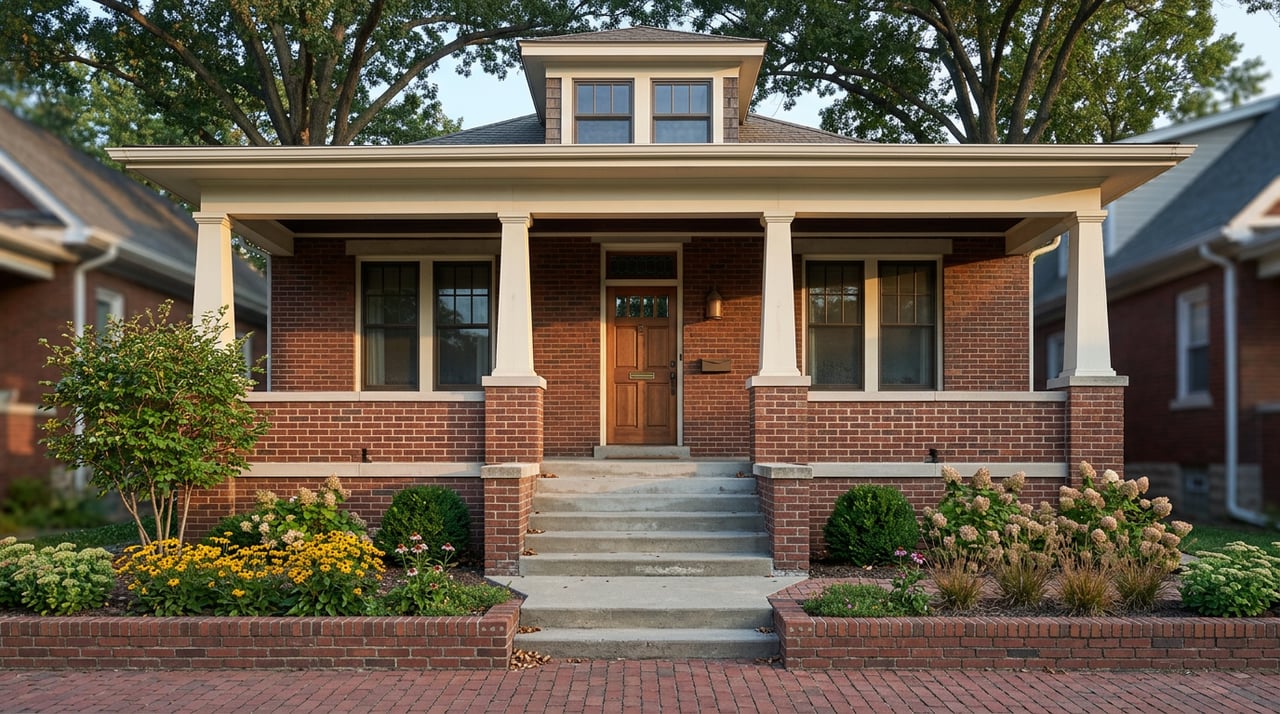
Here's the version of this story that plays out on repeat in Washington Park: a well-priced Denver Square lists, multiple offers land within days, and the winning buyer waives everything but a short window for anything genuinely material to stay competitive. Nobody asks about the sewer line, because nothing about the house suggests a reason to. The kitchen's updated, the floors are refinished, the roof looks fine from the curb.
None of that tells you anything about the pipe running from the foundation to the street, buried under six feet of expansive clay soil since the house was framed. When an original clay lateral from that era finally fails, it tends to follow the same script: a slow drain that suddenly backs up into more than one fixture at once, discovered well after closing, when the only remaining question is who pays.
That's the mechanism worth understanding before you write an offer here. Washington Park's speed, the very thing that makes it one of Denver's most competitive submarkets, is also what makes its oldest and most invisible system the one buyers are most likely to skip.
Why speed still wins here, even as the rest of Denver slows down
Denver's broader housing market loosened up through the first half of 2026. Metro-wide active listings climbed to 11,539 in April, a 17 percent jump from the month before, according to the Denver Metro Association of Realtors. By mid-year, brokers across the city were describing a market that finally gave buyers room to breathe: more inventory, less pressure to waive inspections, more time to think before writing an offer.
Wash Park didn't get that memo. As of March 2026, the neighborhood's median time on market ran just 15 days, with homes closing at 98 percent of list price. That's the pattern scarcity produces when park frontage and a handful of blocks along South Gaylord Street are simply not replaceable. Reporting through the spring of 2026 put active single-family inventory at roughly 20 listings or fewer at any given time. When supply is that thin, buyers don't get to choose between speed and scrutiny. They pick speed, because the alternative is losing the house.
The same tight inventory that pushes prices up also pushes inspection windows down, right at the moment when this neighborhood's housing stock most needs a closer look.
The one system a standard inspection can't actually see
Most homes in Washington Park went up between 1900 and 1950. That means Denver Squares, Craftsman bungalows, and Tudor revivals, the kind of construction that gives the neighborhood its character and its price premium. It also means original plumbing systems that were never designed to last a century, sitting on top of Denver's expansive clay soil, which swells when wet and contracts when dry.
Homes built in that window across several of Denver's older neighborhoods, Washington Park among them along with Park Hill, Congress Park, Capitol Hill, and Baker, commonly carry clay tile or early cast iron sewer laterals. A standard home inspection covers visible plumbing inside the house. It cannot see the pipe once it leaves the foundation and runs underground to the city connection. The only way to check that section is a camera run through the line, known as a sewer scope.
What a scope typically documents:
- Pipe material and age, confirmed against Denver Water's original tap records where available
- Bellies, or low spots where the pipe has settled and collects debris
- Root intrusion at aging joints, a frequent issue in Denver given how aggressively mature elms and maples seek out moisture
- Offset joints and cracks from decades of soil movement
- Overall slope, since a properly functioning line needs consistent grade toward the city main
None of this shows up on a walk-through. It shows up on a screen, thirty minutes after a technician feeds a camera into a cleanout.
What the numbers actually mean for your closing budget
A sewer scope runs $150 to $300, a rounding error against a Wash Park closing that typically clears seven figures. What it protects against is not.
| Item | Typical 2026 cost |
|---|---|
| Sewer scope inspection | $150–$300 |
| Trenchless pipe lining | $80–$250 per foot ($4,000–$20,000 total) |
| Open-cut sewer replacement | $150–$250 per foot |
| Full trenchless replacement | $160–$300 per foot |
| Common repair range | $5,000–$15,000 or more |
Denver requires a Sewer Use and Drainage Permit for any main line replacement, and the city holds the homeowner responsible for the entire lateral, not just the portion under the yard. That includes the section running beneath the sidewalk and street to the municipal tap. Pipe depth matters too. Denver's frost line sits around five feet, which affects both excavation cost and which repair method actually makes sense for a given line.
Whether a line needs a full replacement or can be saved with a trenchless liner comes down to condition. A line with minor cracks and a mostly intact structure is a good candidate for lining, which adds decades of service life without digging up the yard. A line with a collapsed section, severe offsets, or root-filled voids usually needs full replacement. Either way, that's a negotiation to have before closing, not a surprise to discover after.
Two different city processes, and buyers who confuse them
Washington Park includes both individually landmarked homes and properties within historic district boundaries, and one thing trips up more buyers than it should. Denver's Landmark Preservation review applies to street-visible exterior work, projects like roof replacement, window changes, additions, retaining walls, and new siding. It does not extend to what's happening underground. A sewer lateral replacement runs through Denver's Department of Transportation and Infrastructure via the Sewer Use and Drainage Permit process, entirely separate from any Certificate of Appropriateness a historic designation might require for exterior work.
The city has taken its own sewer infrastructure seriously in this specific area. Denver's Department of Transportation and Infrastructure has run a Washington Park West Sanitary Lining Project addressing aging sanitary lines in the neighborhood, a reminder that this isn't a hypothetical concern dreamed up by inspectors trying to upsell a service. It's a documented condition the city itself has been working to address on the public side of the line, while the private lateral from house to main remains the homeowner's responsibility.
One more detail worth knowing if you own or are buying an individually designated landmark property: Colorado's State Preservation Tax Credit covers 20 percent of qualified restoration costs, up to $50,000, and plumbing upgrades are explicitly eligible. If a sewer lateral replacement gets bundled into a larger historic rehabilitation project, that credit is worth asking about.
What to actually do before you write, or accept, an offer
If Denver's clearest lesson about a market like this is that time pressure changes behavior, the fix isn't complicated. It just requires asking for it up front.
Buyers can request a sewer scope as a specific, named item within a compressed inspection window rather than assuming it's covered by a general walkthrough. Ask the seller whether Denver Water's tap records show the lateral's original install date and material. That single record, cross-referenced against the pipe materials common to homes built between 1900 and 1950, tells you most of what you need to know before a camera ever goes into the line.
Sellers face the mirror image of this problem. In a market where a two-week close is the expectation, a scope commissioned before listing removes the single most likely source of a renegotiation after the buyer's own inspection turns something up. It's a two-hundred-dollar way to protect a closing timeline that a surprised buyer could otherwise slow down or walk away from entirely.
Neither move is about assuming every Wash Park home has a problem. Most transactions in this neighborhood close without incident. It's about recognizing that the market's own competitive pressure creates a blind spot in exactly the place a century-old lateral needs the most attention, and closing that gap costs less than a month of the market's typical appreciation.
Common questions
Does this mean every home in Washington Park has a bad sewer line? No. Age and pipe material create a higher likelihood of eventual issues, not a guarantee of a current one. A scope simply replaces guesswork with a documented answer.
Can I request a sewer scope contingency even if my overall inspection window is short? Yes. A scope typically takes 30 to 60 minutes and can often be scheduled within a compressed window alongside a general inspection, since it's a separate, narrowly focused service rather than a full home inspection.
If the scope finds a problem, who typically covers the cost? That's negotiable and depends on the findings and the contract terms. Buyers commonly request either a price adjustment or a repair credit once a scope documents a specific defect, rather than assuming the cost falls entirely on one side.
If you're weighing an offer in Washington Park, or getting ready to list a home in one of its historic blocks, the details above are exactly the kind of thing worth walking through before you're under a deadline. Downing Street Group - Engel & Völkers works this neighborhood block by block, and we'd rather talk through a sewer scope with you now than negotiate one after an inspection surprise. Request a private consultation and let's look at your specific situation before you write your next offer.
