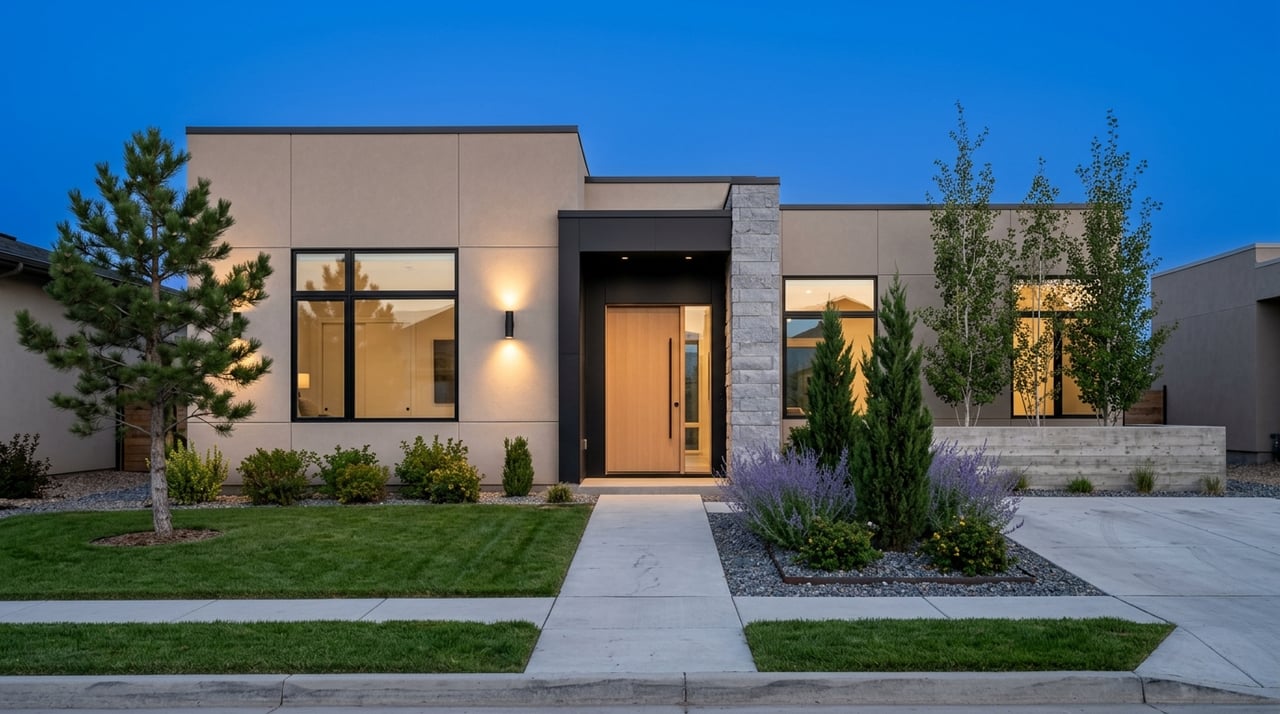
If you have been looking at homes in Douglas County, you have probably noticed that some communities feel very different even when the homes look similar on paper. That is often because master-planned communities shape far more than street layouts. They influence your day-to-day amenities, monthly costs, and the overall living experience. If you want to understand how these communities affect life in Douglas County and what that could mean for your next move, let’s dive in.
Why master-planned communities matter
In Douglas County, master-planned communities are a major part of how growth happens. The county had an estimated 399,396 residents in July 2025, along with a median household income of $149,594, a median owner-occupied home value of $713,600, and a 77.4% owner-occupancy rate. That gives you a sense of a large, established suburban market where planned development plays a big role.
Douglas County’s 2040 Comprehensive Master Plan aims to balance open space and wildlife habitat with jobs, housing, recreation, and services. Land-use applications are reviewed for consistency with that plan. In practical terms, that means many of the county’s largest communities were shaped through long-term planning frameworks instead of standard subdivision rules.
How planning shapes daily life
A master-planned community is not just a group of homes with a shared entrance sign. In Douglas County, these communities often combine parks, trails, recreation, utilities, design standards, and maintenance within a district, authority board, or HOA structure. That structure can affect both your lifestyle and your monthly carrying costs.
This is why two homes with similar square footage can feel very different once you look beyond the listing sheet. One may come with access to recreation centers and broad trail networks, while another may include different service levels, design controls, or funding structures. The community model matters almost as much as the house itself.
Common benefits you may notice
Buyers are often drawn to master-planned communities because they can offer a more organized living experience. Depending on the community, that may include:
- More predictable neighborhood standards
- Access to parks, trails, pools, and recreation
- Clearer funding for roads, common areas, and open space
- A stronger sense of long-term planning
Common trade-offs to consider
These communities can also come with added obligations. Before you buy, it helps to understand possible trade-offs such as:
- HOA dues, metro-district levies, or service fees
- Covenant and design-review rules
- Ongoing construction in newer phased communities
- Different levels of amenity access depending on the neighborhood structure
Highlands Ranch offers an established baseline
Highlands Ranch is one of the clearest examples of large-scale master-planned living in Douglas County. Founded in 1981, it spans 22,000 acres and is home to about 103,000 people. It operates through both a Metro District and the Highlands Ranch Community Association, which together shape governance, maintenance, and recreational programming.
The scale of amenities is a major part of its appeal. The Metro District manages 26 parks, more than 70 miles of trails, and 2,644 acres of open space. The community association adds four private recreation centers and the 8,200-acre Back Country Wilderness Area, which includes 26 miles of passive walking and biking trails.
That planning also affects how the neighborhood feels. More than 4,700 homes back to open space, and those spaces are managed for recreation, wildlife, and drainage corridors. For many buyers, that creates a sense of structure and continuity that has helped Highlands Ranch remain a core benchmark market in the county.
From a pricing standpoint, Zillow reported an average Highlands Ranch home value of $713,853 on April 30, 2026, down 3.2% from the prior year, with homes going pending in around 8 days. That places Highlands Ranch very close to Douglas County’s overall median owner-occupied home value, which reinforces its role as a mainstream reference point rather than a niche segment.
Castle Pines includes two distinct markets
One of the most important things to understand is that Castle Pines city and Castle Pines Village are not the same market. They share a name, but they offer different planning models, amenities, and price points. If you are considering this area, it is worth separating the two right away.
Castle Pines city focuses on growth and connectivity
Castle Pines city is a 9.5-square-mile community with a long-range comprehensive plan centered on mixed-use growth, housing variety, transportation, parks, and land use. Its 2021 plan update calls for 50 miles of new trails and trail-gap connections, more public open space, 190 acres of public parkland, and future regional transit planning.
Today, the city reports nearly 60 miles of trails, 122 acres of parks, and more than 1,850 acres of open space. That tells you the community is investing in how people move through and use the area, not just in residential expansion. For buyers, this can translate to a broader civic planning vision beyond a single subdivision.
Redfin reported a median sale price of $989,489 for Castle Pines city in April 2026, up 20.4% year over year, with homes selling in about 30 days. That places the city in a higher price tier than Highlands Ranch and Sterling Ranch.
Castle Pines Village emphasizes privacy and amenities
Castle Pines Village is a separate, gated, covenant-controlled community spanning 3,000 acres. Its structure is more private and more amenity-dense than many other Douglas County neighborhoods. Official materials highlight 24-hour management, security patrols, alarm monitoring, home-vacation monitoring, trash and recycling pickup, and snow removal on common streets.
Residents also have access to pools, tennis courts, a fitness center, playgrounds, about 12 miles of trails, and two private Jack Nicklaus-designed golf courses. The Homes Association says dues support emergency services, trash collection, and amenity upkeep, and the Village includes 19 sub-associations. That means the community experience is shaped by both shared services and layered governance.
Redfin reported a median sale price of $1,686,629 for Castle Pines Village in April 2026, down 8.1% year over year, with homes selling in about 32 days. Even with that recent dip, the Village remains in a very different pricing category from Castle Pines city, Highlands Ranch, and Sterling Ranch.
Sterling Ranch reflects newer planning models
Sterling Ranch offers a different version of master-planned living. It is a newer, still-growing community in northwest Douglas County, and its governance model stands out. Instead of a traditional HOA, the community uses a Community Authority Board and seven metropolitan districts.
According to its official governance materials, the CAB is a special-purpose local government, not an HOA. The metro districts are funded through property taxes and service fees rather than traditional dues. The CAB handles public improvements, infrastructure, covenant enforcement, trash and recycling, snow removal, and other services that may sit with a city or HOA in other communities.
Lifestyle is a big part of the draw here as well. Official materials describe about one-third of Sterling Ranch’s 3,400 acres as preserved open space, around 30 miles of internal trails, access to two state parks and three regional parks, and a park-pass credit for each household. The nine-village plan and multiple builders also create a newer, more varied housing mix.
On pricing, Redfin reported a median sale price of $641,669 in April 2026, down 8.6% year over year. Realtor.com showed a median sale price of $667,000. While those figures differ because the platforms use different methods, both suggest Sterling Ranch sits in the mid-$600,000s and generally below Castle Pines and near or below Highlands Ranch.
What this means for your home search
The big takeaway is simple: master-planned living in Douglas County is not one single product. Highlands Ranch, Castle Pines city, Castle Pines Village, and Sterling Ranch all package services, amenities, and governance in different ways. If you focus only on price per square foot, you may miss the bigger picture.
When you compare homes, it helps to ask what your monthly costs actually support. In one community, you may be paying for recreation centers and open-space access. In another, you may be paying for security services, private amenities, or infrastructure tied to a newer development model.
You should also think about how a community’s age and build-out stage affect your experience. An established area like Highlands Ranch may offer a mature amenity network and a more settled feel. A newer community like Sterling Ranch may offer newer construction and future growth, but also the possibility of ongoing development around you.
What this means for sellers
If you are selling in a master-planned community, your home is rarely judged on the home alone. Buyers are also evaluating the neighborhood framework around it. That includes trails, parks, recreation access, community services, and the type of governance or dues structure in place.
This is one reason accurate positioning matters. A home in Castle Pines Village should not be marketed the same way as one in Castle Pines city, even though the names sound similar. The same is true when comparing an established Highlands Ranch property to a newer Sterling Ranch home.
For sellers, strong presentation starts with the right local context. Buyers want to understand not just what they are buying, but how the community functions and what kind of lifestyle it supports. That is where data-informed pricing and clear storytelling can make a real difference.
Why appreciation is not one-size-fits-all
It is tempting to assume that master-planned communities always appreciate faster, but the current Douglas County data do not support a simple answer. Recent annual changes are mixed across Highlands Ranch, Castle Pines city, Castle Pines Village, and Sterling Ranch. These remain desirable communities, but they are not moving in lockstep.
The safer conclusion is that structured planning and strong amenities can help support demand, but appreciation still depends on the specifics. Price point, privacy, lot mix, amenity package, community age, and the supply of comparable homes all appear to matter. The master-planned label alone does not tell the whole story.
If you are weighing a move in Douglas County, it helps to look past the headline and study how each community actually works. The right fit often comes down to your priorities, whether that is established amenities, newer construction, privacy, or a specific monthly cost structure. If you want help comparing Douglas County neighborhoods with a clear, data-informed lens, connect with Downing Street Group for a private consultation.
FAQs
What makes a master-planned community different in Douglas County?
- In Douglas County, master-planned communities often combine housing, open space, trails, parks, recreation, and community services under a long-term planning and governance structure such as an HOA, metro district, or authority board.
How do Highlands Ranch and Sterling Ranch differ for buyers?
- Highlands Ranch is a large, established community with extensive parks, trails, open space, and recreation centers, while Sterling Ranch is newer, still growing, and uses a special district structure focused on infrastructure, services, and preserved open space.
Are Castle Pines city and Castle Pines Village the same market?
- No. Castle Pines city and Castle Pines Village are separate submarkets with different planning models, amenities, and price points, with the Village currently sitting in a significantly higher median sale price range.
Do master-planned communities in Douglas County always have HOA fees?
- Not always. Some communities use traditional HOA structures, while others use metro districts, service fees, or special-purpose local government models instead of standard HOA dues.
Do master-planned communities in Douglas County appreciate faster?
- Not necessarily. Recent market snapshots show mixed year-over-year price changes, which suggests that appreciation varies by community, price tier, amenity mix, privacy, and available inventory.
